
Tree Roots in a Sewer Pipe: Repair and a New Cleanout
A DPS Project & Practical Advice for Wheeling and Chicago’s Northwest Suburbs
A sewer line can start draining again after a blockage is cleared and still need attention. When tree roots have found a way into the pipe, the next question is whether the opening that let them in is still there.
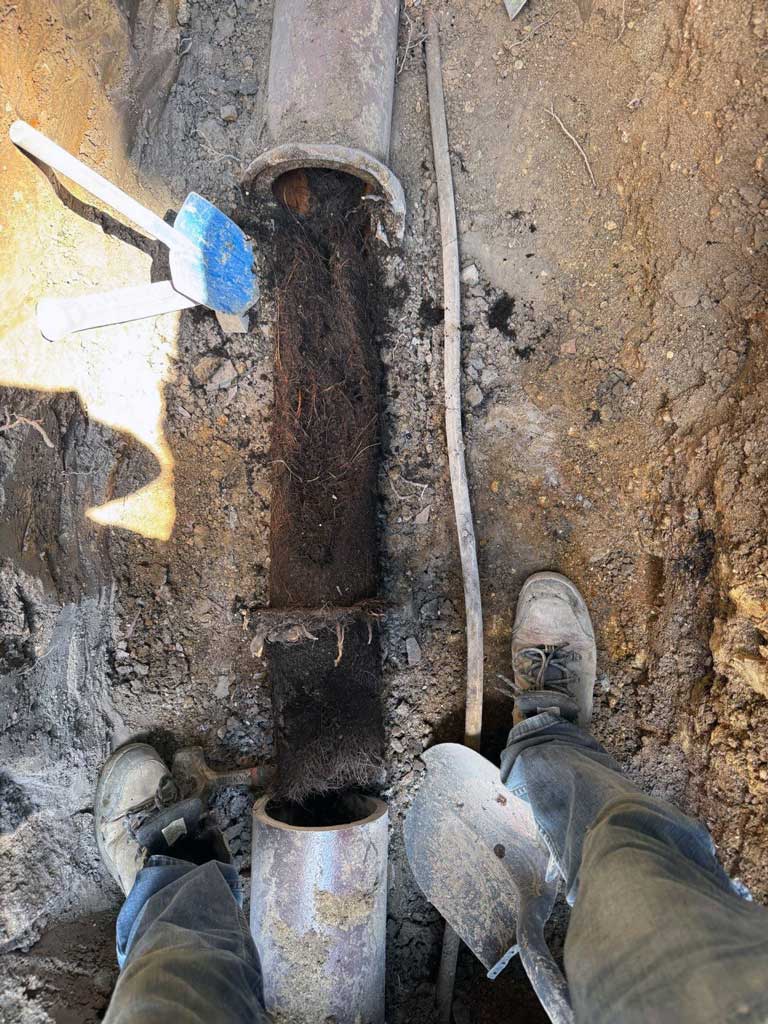
On this Drain & Plumbing Services project, dense roots had blocked a sewer pipe. Our crew excavated the area, exposed the affected section, completed the pipe repair, and installed a new cleanout. The photos show the root mass, the exposed pipe, and the new access point before backfilling.
Here is what homeowners can learn from the repair: how to recognize a recurring sewer problem, what cleaning can accomplish, and why a properly placed cleanout makes future service easier. For help with your own line, explore our drain cleaning and main sewer line services.
Will Clearing the Roots Solve the Problem?
Cleaning can restore flow, but it cannot repair an opening or a broken section of pipe. If roots can still enter the line, another blockage may develop. The right next step depends on the pipe’s condition and where the roots are entering.
Dealing with repeated backups? Call DPS at 847-409-1362 to discuss an inspection and your repair options.
What We Found and Repaired on This Project
The close-up photo shows how much space roots can occupy inside a sewer pipe. Instead of an open passage for wastewater, there was a dense tangle of roots in the affected section. Clearing a narrow path through that material would not, by itself, establish that the pipe was in good condition.
Our crew opened the repair area and exposed the pipe. With the affected section accessible, we completed the sewer pipe repair and added a new cleanout. In the photos below, you can see the existing pipe ends before the repair and the new section with its capped access point afterward.
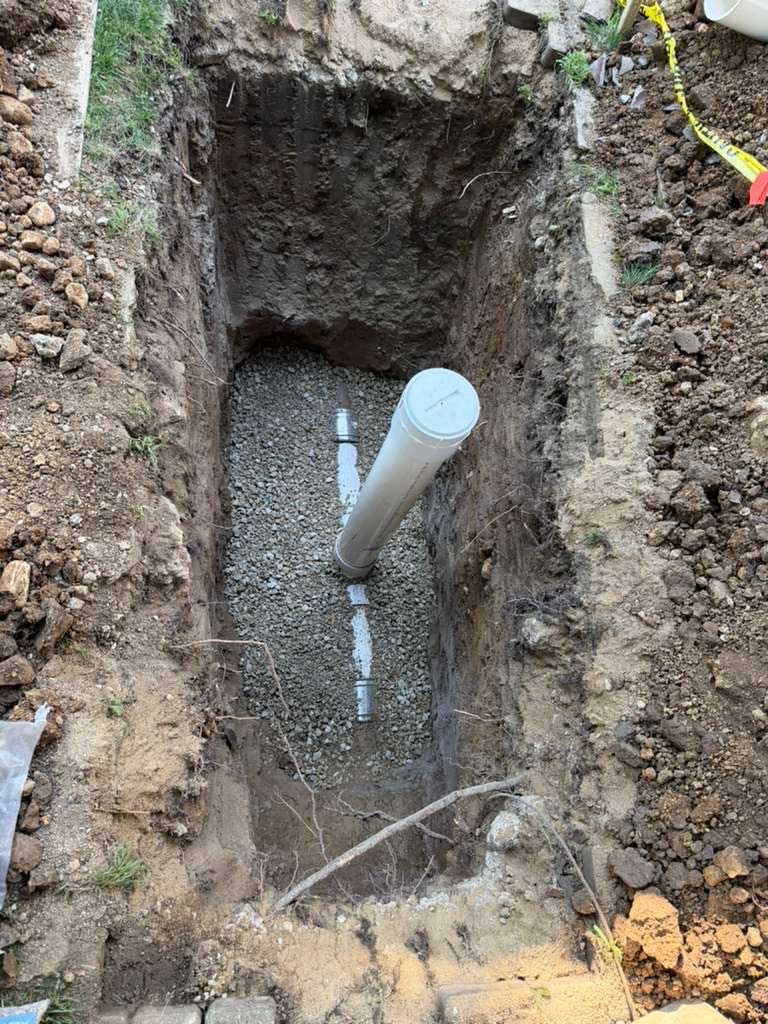
The added cleanout gives future service visits a dedicated place to access the line. That matters when a plumber needs to inspect the sewer, investigate another blockage, or perform maintenance without first working out how to reach the pipe.
How Tree Roots Get Into Sewer Pipes
Roots can enter through openings in a sewer line, including defects around joints or damaged sections. Once inside, they can catch waste and contribute to a blockage. The U.S. Environmental Protection Agency identifies root intrusion through pipe defects as one cause of sewer blockages.
A large tree near the sewer route is a reason to investigate, but it does not prove where the problem is. Repeated clogs can also involve grease, other obstructions, a displaced joint, or a damaged section. An inspection is more useful than guessing from the surface of the yard.
What a New Sewer Cleanout Actually Does
A sewer cleanout is a capped access opening connected to the line. A plumber can use it to introduce a camera or appropriate cleaning equipment. Depending on the system’s layout, an accessible outdoor cleanout may also reduce the need to access the sewer through fixtures inside the building.
On this project, installing a cleanout while the repair area was already open created an access point for later inspections, cleaning, and maintenance. The repair addressed the affected pipe section; the cleanout improves the ability to service the line going forward.
Keep a cleanout identifiable and accessible after landscaping or other work. It should remain properly capped. A cleanout does not prevent every backup, and it does not stop roots from entering a different defect elsewhere along the pipe.
Rodding, Hydro Jetting, or Pipe Repair?
These services solve different parts of a sewer problem. A recommendation should explain what was found and why the proposed work fits the condition of your line.
| Service | What it can address | Its limits |
|---|---|---|
| Rodding or mechanical root cutting | Opening a blockage and cutting root material with appropriate equipment. | Does not seal the opening where roots entered. |
| Hydro jetting | Cleaning buildup from a suitable pipe and removing debris that restricts flow. | Does not fix a crack, collapse, or displaced connection. |
| Sewer pipe repair | Addressing an identified damaged or defective section. | The remaining line still needs to be considered; a local repair is not a replacement of the whole system. |
Dense roots may require mechanical cutting, and an unstable pipe may be unsuitable for aggressive cleaning. Our hydro jetting service page explains the cleaning option in more detail. The goal is to choose a method that suits the pipe, rather than repeatedly paying for a temporary opening in the same blockage.
Why a Camera Inspection Helps Define the Repair
A sewer camera can help show where roots are entering, whether a joint has shifted, and whether damage extends beyond one area. Initial cleaning may be needed before the camera can travel through the line or provide a useful view. A camera cannot see clearly through every obstruction or a pipe full of dirty water.
Ask to see the findings and have the location explained. Is the problem concentrated in one section, or are there several defects? What condition is the adjoining pipe in? Those answers help determine whether cleaning, a localized repair, or a larger project makes sense. DPS offers sewer camera inspections and main-line service for homeowners and businesses in the area.
Warning Signs Worth Checking
A main-line problem can affect more than one fixture. Arrange an assessment if you notice:
- Several drains slowing down or backing up around the same time.
- A toilet gurgling when another fixture drains.
- Wastewater coming up through a lower-level shower or floor drain.
- The same sewer blockage returning after previous cleaning.
These symptoms do not identify roots on their own. What matters is finding the cause before choosing another cleaning visit or a pipe repair.
What to Do During an Active Sewer Backup
Stop using toilets, sinks, showers, dishwashers, and washing machines so you are not adding more water to the backed-up line. Keep people and pets away from sewage, and avoid standing water near electrical equipment. Leave an overflowing or backed-up cleanout for a professional to assess.
For a sewer backup in Wheeling, the Village advises contacting Public Works first so the public main can be checked. Its Utility Division page provides current daytime and after-hours contact information. If the problem is in the connecting private sewer line, a licensed plumber can address it. In other suburbs, check your municipality’s sewer-backup reporting instructions. DPS provides 24/7 emergency plumbing assistance for private-line problems.
What to Ask Before Approving a Sewer Repair
A useful estimate should explain the affected area, the proposed pipe work, and what happens to the surface afterward. Ask whether the scope includes a new cleanout, required permits or inspections, backfilling, and restoration of lawn, landscaping, paving, or other disturbed surfaces.
Depth, access, nearby utilities, the condition of the existing line, and the extent of the repair can all affect the work. That is why a sewer repair price needs to be based on your property, rather than a number attached to somebody else’s project.
After the work, keep the inspection findings and repair information with your home records. Ask where the cleanout is, how to keep it accessible, and whether the remaining line needs a follow-up inspection or maintenance plan. There is no single cleaning interval that fits every sewer.
Sewer Repair Help in Wheeling and the Northwest Suburbs
Drain & Plumbing Services is a licensed, bonded, and insured plumbing company based in Wheeling, Illinois. We provide sewer and main-line service, drain cleaning, camera inspections, rodding, hydro jetting, and plumbing repairs throughout Chicago’s Northwest suburbs, including Buffalo Grove, Arlington Heights, and Glenview.
If you have a recurring blockage or want to discuss a new cleanout, tell us which fixtures are affected, when the problem started, and whether the line has been inspected or cleaned before. That history helps us understand what to investigate.
FAQ: Tree Roots, Sewer Pipe Repair & Cleanouts
Yes. Cutting or clearing roots can reopen a sewer line, but roots may return if the opening that allowed them into the pipe remains. A camera inspection can help identify the entry point and whether cleaning, a pipe repair, or a broader replacement should be considered.
A sewer cleanout is a capped access opening connected to the drain or sewer line. It gives a plumber a place to insert inspection and cleaning equipment. A cleanout makes the line easier to service; it does not remove roots, repair a damaged pipe, or prevent every future backup by itself.
Hydro jetting can remove buildup and some root material when the pipe is suitable for that method. Dense roots may need mechanical cutting. Cleaning does not seal an open joint or repair a cracked, collapsed, or badly displaced pipe, so the condition of the line should guide the recommendation.
The decision depends on the location and condition of the pipe, the extent of the defect, available access, and the condition of the surrounding line. Camera inspection and locating can help define the problem. Some blockages can be cleaned, while a damaged section may need to be exposed and repaired.
No. A localized defect may allow a repair to one section, while widespread damage can require a larger scope of work. Ask to see the inspection findings and have the plumber explain why the proposed repair addresses the problem. Root growth alone does not establish how much pipe needs replacement.
The price depends on pipe depth, access, the length and condition of the affected section, nearby utilities, the cleanout arrangement, and surface restoration. Ask for a written scope that explains excavation, pipe work, cleanout installation, required permits or inspections, backfilling, and restoration. A site assessment is needed for a useful estimate.
Stop using toilets, sinks, showers, and water-using appliances. Keep people and pets away from the affected area and avoid water near electrical equipment. In Wheeling, the Village advises contacting Public Works first so the public sewer main can be checked. If the problem is in the private sewer line, a licensed plumber can address it.
Yes. Drain & Plumbing Services is based in Wheeling, Illinois and provides sewer and main-line service, drain cleaning, camera inspections, rodding, hydro jetting, and plumbing repairs throughout Wheeling and Chicago’s Northwest suburbs. Call 847-409-1362 to discuss sewer pipe repair or a new cleanout. Emergency plumbing service is available 24/7.
Get a Clear Plan for Your Sewer Line
A recurring sewer problem deserves an explanation of the cause and a plan for addressing it. For sewer pipe repair, drain cleaning, or cleanout installation, call 847-409-1362. Our team can discuss your situation and the next available service. Emergency plumbing service is available 24/7.